Controlled By: Morgoth, Archdemon of Avarice
Purpose: Infernal Military Foundry and Training Ground


Key Features of the Region:

  • Harsh Environment:
    • Extreme heat (130°F+); minimal relief even at night.
    • Air filled with sulfur and volcanic gases—breathing gear essential.
    • Frequent eruptions and ground tremors.
  • Terrain to Watch Out For:
    • Black Sand Dunes: Unstable, hide dangerous magma sinkholes.
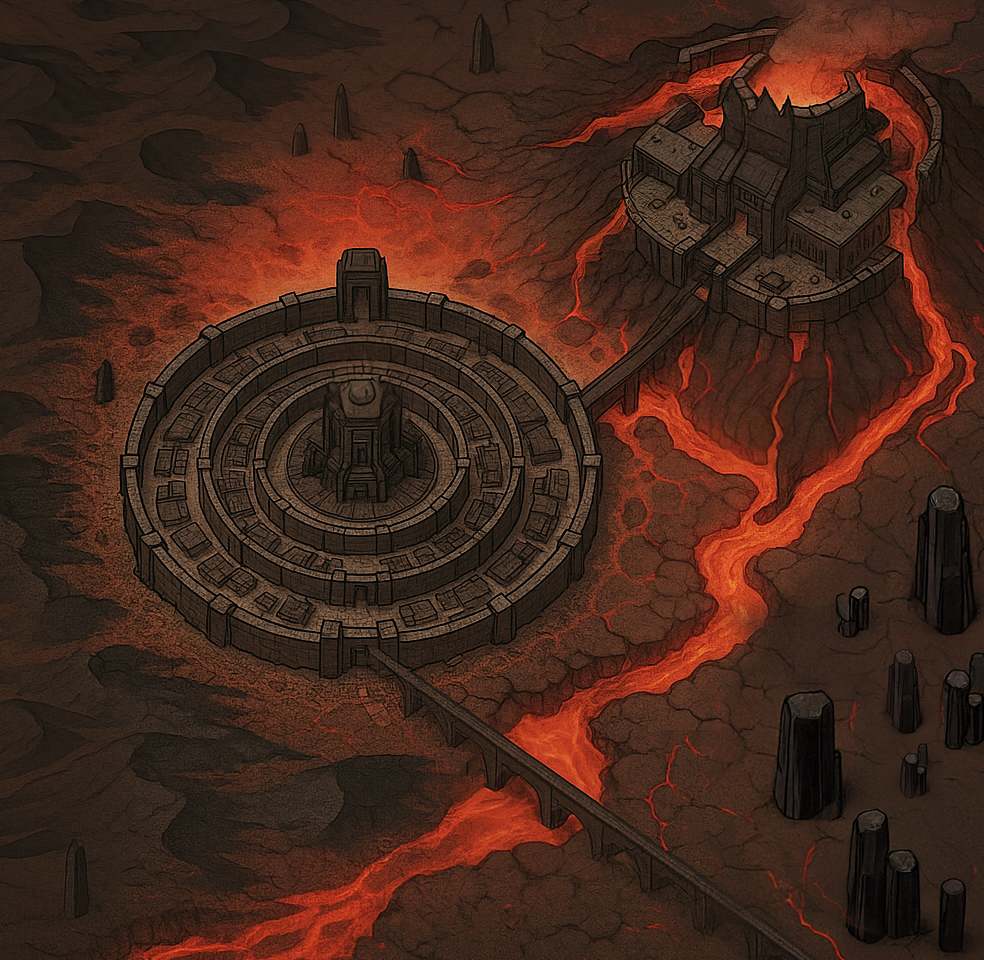
    • Obsidian Pillars: Tall, glassy spires—used as signaling towers by local forces.

Central City: “The Bastion”

  • Layout:
    • Massive fortress-city built in rising tiers, each hotter and more secure than the last.
    • Heavily fortified gates with tolling iron bells, signaling the arrival of new prisoners or soldiers.
  • Important Areas:
    • Foundry District: Constant weapon production, loud hammering and industrial activity.
    • Military Barracks: Home to Morgoth’s disciplined armies (“Forgeguard Legions”).
    • Market Zones: Active trade in rare metals, weapons, and supplies—strictly controlled.
  • Entrances:
    • Gates allow denizens and visitors in and out. Very controlled. Southern bridge and main gate the only access point open to travelers.
  • Library:
    • Morgoth requires all contracts of any demon under his command to be kept in his personal library on the second ring. No one is allowed access without a writ from Morgoth himself.

Mount Gravalon & The Great Forge

  • Volcano & Forge:
    • Active volcano with enormous forge at the rim, producing powerful weapons and armor.
    • Fueled by captive souls; access restricted to elite forces.
  • Access:
    • Bridge from The Bastion to The Great Forge’s inner sanctum for direct access.
    • Can be accessed by climbing up Mount Gravalon northeastern face.

Survival Guidelines:

  • Use heat-resistant clothing.
  • Stick to marked paths (obsidian cairns indicate safety).
  • Limit physical exertion to avoid heat stroke and exhaustion.

Strategic Notes:

  • Entire realm is heavily militarized, focused solely on warfare and production.
  • Minimal civilian presence.
  • High security.

This handout was given to Rabbert as he searched the library in Verzara before returning to the 4th level of hell.


You find a dusty tome entitled The Journeys of Harun of Karadesh, penned by an old, notoriously reckless tiefling explorer who ventured through various planes decades ago. Among its crumbling pages, a section details his harrowing visit to the fabled fourth layer of Hell—Phlegethos—and specifically its central city, which he simply refers to as Ebon Bastion. The writing is careful, almost cautious, as though Harun feared something might hear him if he spoke too openly.


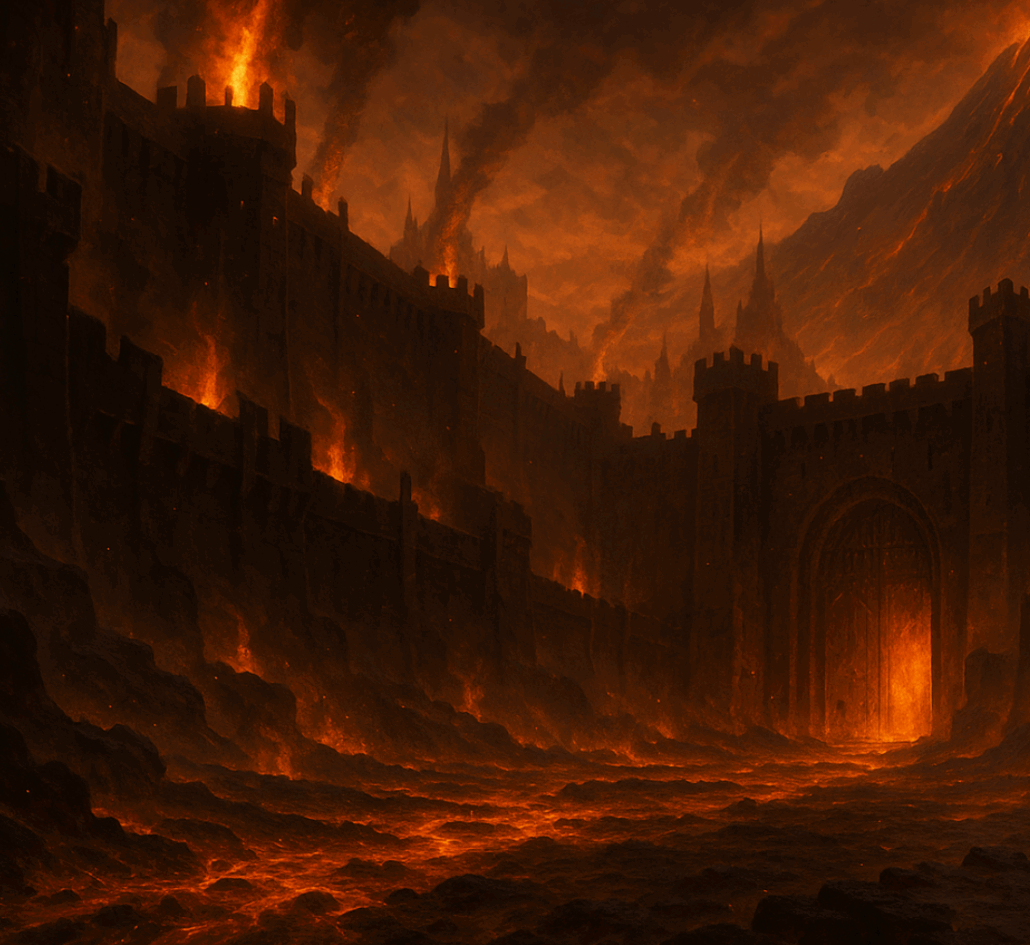
We arrived near nightfall—though night meant little there. The air itself baked like a blacksmith’s kiln, heavy and acrid, tasting of copper and ash. Ahead sprawled The Bastion, a colossal fortress-city wrought entirely from dark stone and reinforced iron, ringed by high, angular walls rising in concentric layers like the terraces of a massive ziggurat. Each successive level of the city rose higher, hotter, and narrower, until the highest towers shimmered faintly through waves of oppressive heat.

Gaining entrance was challenging. The outer gates, enormous slabs of iron hung from dark chains, remained closed except to processions of prisoners or legions of armored soldiers. Bells tolled incessantly, echoing off the obsidian walls, a somber accompaniment to the continuous hammering sounds coming from within. Eventually, through bribery and cunning, we passed through a smaller, lesser-known side passage used by traders smuggling in supplies from cooler, distant layers.

Within, the city buzzed with ruthless efficiency. Armored soldiers drilled endlessly along stone courtyards lined with precise rows of iron statues—silent, watchful sentinels that seemed to follow our every step. Everywhere, the noise was relentless: blacksmiths forging weapons in countless open-air workshops, the grinding and groaning of great machines hauling ore and molten metal, and beneath it all, a distant rumble emanating from the volcano above. Heat here was unbearable without special gear; our cloaks, woven from basalt fiber acquired from the locals, provided scant protection but made the difference between mere misery and certain death.

Curiously, trade flourished even in such hostile surroundings. Merchants peddled rare minerals, weapons forged of hellsteel, and even alchemical concoctions derived from minerals unique to the volcanic slopes. Morgoth himself was never seen openly, but his presence loomed heavily in whispered conversations, as traders competed fiercely for the privilege of supplying his elite legions or the elusive smiths who worked directly within the volcano’s rim.

Not all who dwelled there were devils. Some creatures of strange volcanic lineage, and constructs animated by unknown magic walked the streets freely though none seemed pleased to linger. The mortal inhabitants wore faces lined deeply with fatigue and caution, quick to retreat to shaded stone alcoves or beneath canvas awnings, and never engaging in idle talk for long. One interesting thing of note was the wool they wore, apparently constructed from basalt threads of some kind. It appeared to protect them from the heat. Many windows were lined with it and those of noble, but non-devil origin, would cloak themselves in it.

We did not stay long either. Even in brief observation, the city had the clear, ruthless precision of a blade’s edge, beautiful in its brutal efficiency, terrifying in its relentless purpose. The Bastion, at its core, was a vast military forge, dedicated entirely to arming and supporting Morgoth’s endless campaigns. To stay longer was to risk death.”